
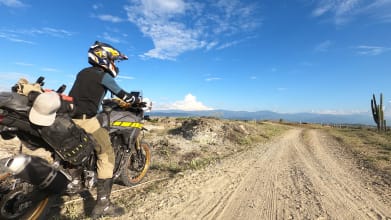

We arrive back in Pensilvania around 5:30. The streets are now more crowded with parked motorcycles and pedestrians in town for Saturday evening events. The women and girls wear colorful dresses, and the men are cleaned up, wearing their best clothes. It’s crowded and feels festive.
We head to the plaza where we find a sliver of space on the curb to park our motorcycles.
“Can someone use their phone to look for a hotel?” I ask. “My phone is almost dead.”
“Happy to do it,” Evan says. He sits on a park bench and starts working on it.
Meanwhile, Tucker and I walk into a cafe on the corner of the plaza to see if we can buy some bottled water. He starts a conversation with a teenage girl who appears to be working there.
“¿Cuál es tu hotel favorito de la ciudad? (What is your favorite hotel in town?)” he asks.
She returns a puzzled look, then repeats the question to the woman behind the counter. She too looks puzzled. Neither of them has probably ever stayed in a hotel, much less one in their own town.
“Let me ask around,” Tucker says.
“Evan is looking on a booking site to see what’s here,” I say.
“I know, but the locals will have better intel,” he replies.
“I don’t think the locals have any intel on hotels, much less which are good or bad,” I reply.
Evan is looking at his phone when I get back outside. “Looks like there are a couple,” he says. “An interesting one on a farm just out of town. Have a look.”
The photos look great. A lodge about a half mile out of town with four rooms available. “Hey guys, Evan found a lodge out of town; it looks pretty good,” I say.
“Sounds good to me. How far?” Aaron asks.
“Looks like it’s on the edge of town,” Evan replies.
“Great, I’m in,” Aaron says.
“Me too,” I say.
Tucker ignores the exchange and is still asking the woman about a place to stay.
“Hey Tucker, let’s roll,” Aaron says.
Tucker listens.
* * *
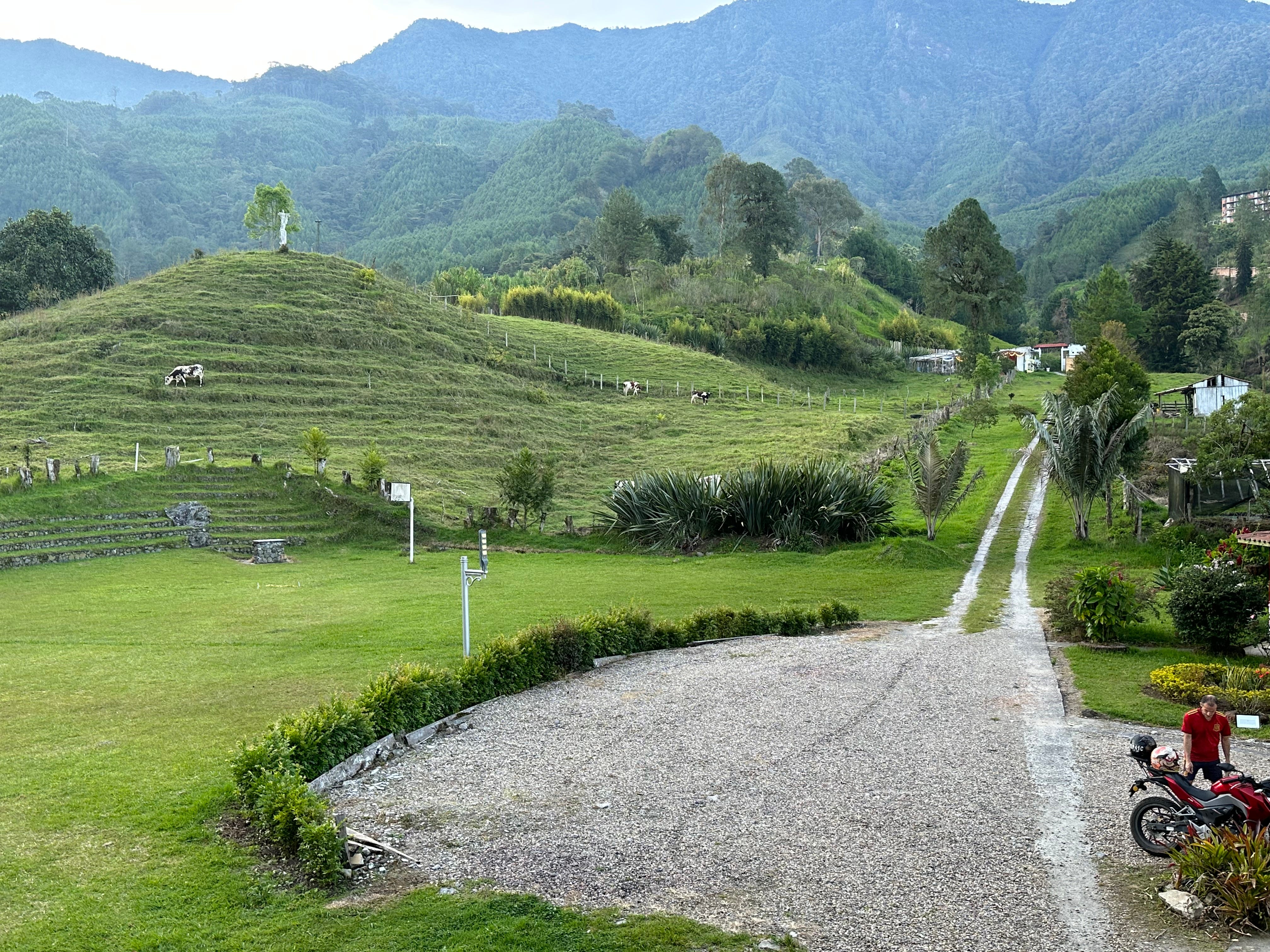
The lodge sits in a meadow on a hillside at the end of a long partially paved drive. Dairy cattle graze in the pasture surrounding the lodge, and flowers bloom around the property. The air is clean and crisp. At the top of the hill, where the drive begins, there is a walk-up cafe that appears to be coming to life for the night.
Aaron, Tucker, and Evan decide to head up the hill to have a swim in the stream. I stay back to get showered and make a couple calls, hoping to close the loop with Blaine and touch base with Betty.
I call Blaine and get his voicemail; I don’t bother leaving a message.
I call Betty, we talk for a few minutes before she has to run out to meet friends for dinner. The conversation is transactional, but I feel better without logging more conflict.
My phone rings; no caller ID on the local network. “Hello, this is Shaun.”
“Hey, it’s Blaine. How goes the ride?”
“It’s going well. How about you? I’ve been trying to reach you,” I manage to say without an edge.
“Things are better than when I sent you the email a couple of days ago, but still not good,” he says before diving into the details of the issues at Torrent.
I learn that the company has missed its revenue targets and that our two largest customers are late on multi-hundred-thousand-dollar payments.
“Have you been out to see them?” I ask.
“No, I’ve been dealing with family stuff.”
“Is everything O.K.?” I ask.
“Yeah, I’ll tell you about it later.”
“How about Josh? Has he visited them?” I inquire whether our VP of business development has worked on the relationship.
“No, he’s been busy with other stuff,” he replies.
“Am I missing something here? What is more important than cash flow right now?” I ask with annoyance. “Are we going to be O.K. until January?”
“I think so,” Blaine replies with a longer explanation of the projected cash flow.
“I’m flying back next week and will stop over in Denver so we can work through this together. In the meantime, someone, preferably you, needs to go see those customers to see what we can do to accelerate payment,” I suggest what I think is obvious.
“I’m busy next week; I’ll see if I can get Josh to go,” he says.
The conversation ends. It is now clear to me that something needs to change at Torrent when I return.
* * *
Just before dark, I stroll alone the quarter mile up the drive to the entrance of the estate, where there is a walk-up cafe. The temperature is dropping with the down-sloping breeze coming out of the mountains, so I wear my insulated jacket.
I approach the walk-up window and introduce myself to the young couple running the small street-food style cafe. They speak decent English, I tell them about our trip. I order a beer and go out back with my tablet to check email while I wait for the others. Nothing from Veronica; I shoot her the usual text, not expecting news.
The outdoor dining area is covered, with a fire pit at one side. String lights line the fence and trees, creating a warm atmosphere. A couple of nicely dressed middle-aged women are setting up for a party. A large decorated cake, flowers, and a tablecloth are on the picnic table.
“¿Fiesta esta noche? (Party tonight?)” I ask the woman working behind the counter.
“Sí, una fiesta de quinceañero,” she replies. Coming-of-age parties are a common tradition in Latino cultures.
Eventually they trickle in, first Tucker, then Evan, then Aaron who’s tied up on a business call.
“What’s happening here?” Evan asks.
“Quinceañero,” I reply.
“What’s that?” he asks. I explain.
More people begin to trickle in, all dressed nicely with hair done up, multiple generations. The men head to the back where they start building a fire in the fire pit. Everyone seems to know what to do. We look out of place, sitting in our jeans and flip-flops. The people setting up acknowledge us, which makes me feel comfortable despite being underdressed.
“Quinceañero?” I ask one of the men.
“Sí,” he replies. “¿De dónde eres?” he asks.
“Estados Unidos,” I reply to the man now preoccupied with setting up a large Bluetooth speaker for the party.
Aaron joins, and we order food and more beers at the window. By now the party is in full swing. The ladies have brought a potluck of food that looks and smells amazing, better than our fare. Musica tropical (cumbia) now plays on the speaker. The restaurant owners take turns manning the window while the other joins the party. Family friends. I can see the men in the back setting up some sort of tossing game. Curious, I approach them to see what it is. “Hola, ¿Qué es esto?” I ask about the game.
“La Rana (the Frog game),” an older man replies. Then he waves me closer and demonstrates how to play. After they finish eating, the men start to play the game. We watch as they stand about 15 feet from the boards that have small holes in them. Each turn a player tosses 10 coins to see if they can hit the holes. The game and the players — all family and close friends — are competitive and well-practiced.
The older man waves us closer and asks if we would like to play. It doesn’t feel like an intrusion; we are welcomed into the celebration and through the window of a family tradition. We take turns playing La Rana with the men and young women while the older men and women watch and laugh as we struggle. The 15-year-old boy jumps in to play with the older men and us strangers. He is engaged and having fun with his elders and us.
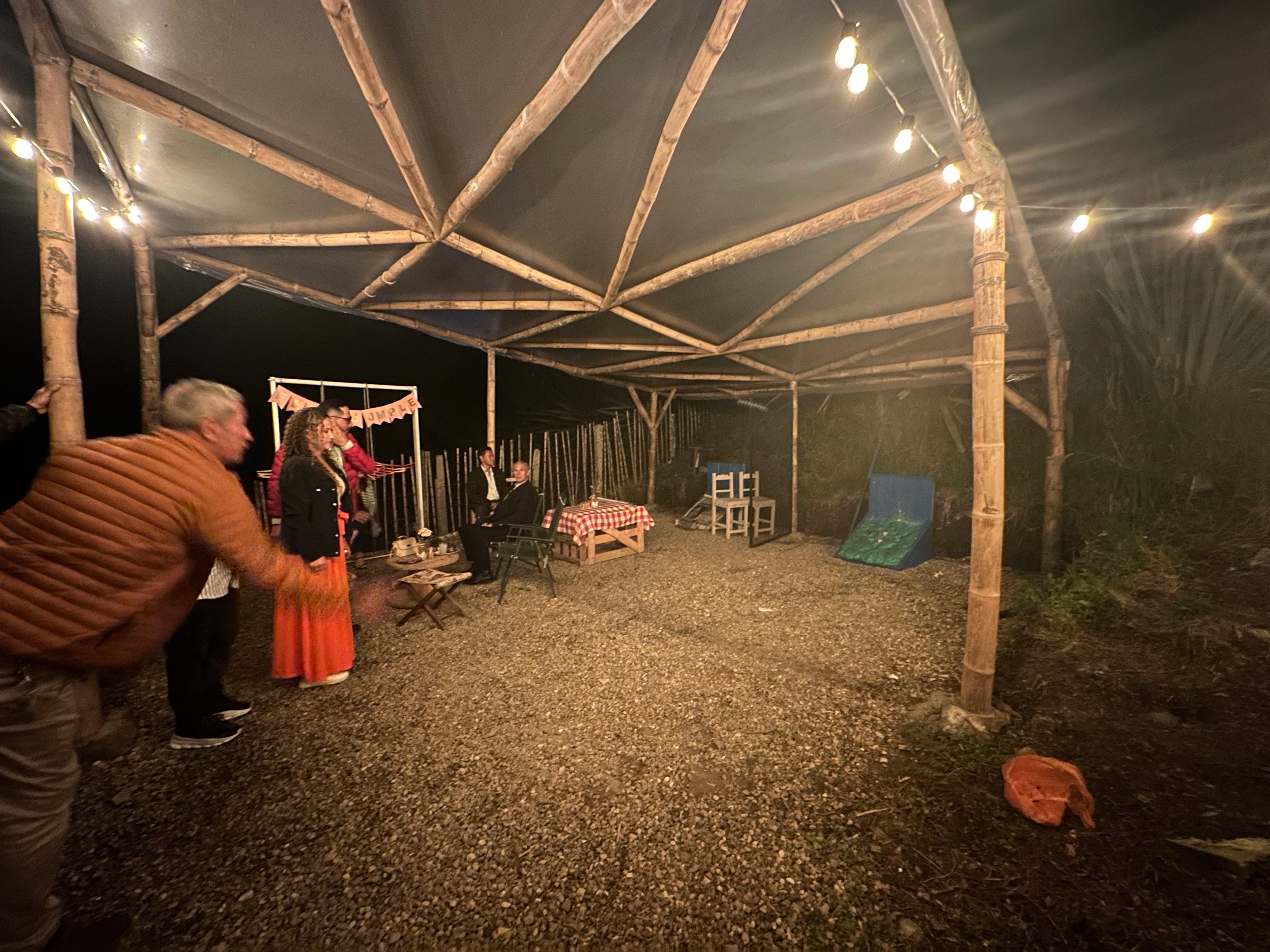
Aaron orders a round of beers for the group, and we continue playing for another hour before deciding to leave the celebration. The man who explained the game to me comes over and gives me a hug. Again, I’m dumbfounded by the hospitality of complete strangers.
I can hear the party up the hill continue as we walk back to the lodge.